
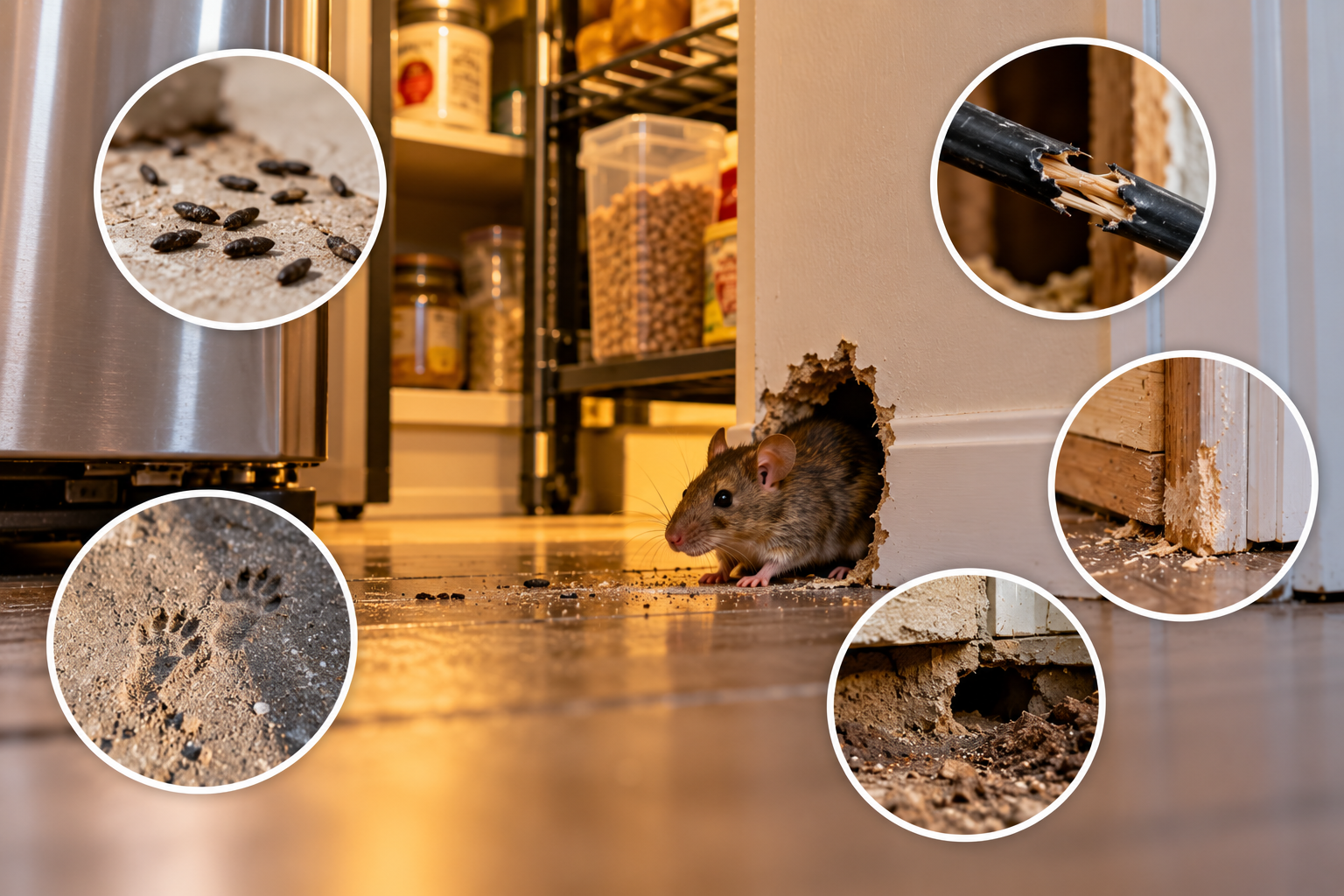
Rodent activity is not always obvious at first. Mice and rats often remain hidden in wall voids, attics, basements, garages, crawl spaces, or storage areas, becoming more noticeable only after evidence begins to accumulate. A single sound or dropping may not confirm a serious problem, but repeated signs in the same areas deserve closer attention. Our team looks for patterns rather than relying on one clue. Effective rodent control starts by identifying where activity is occurring, how rodents may be entering, and whether food, water, shelter, or structural openings are allowing the problem to continue. Recognizing those warning signs early can make professional inspection more focused and help prevent activity from spreading into additional parts of the home. Repeated Droppings, Gnawing, and Noises Can Signal Active Rodents Fresh evidence is one of the clearest reasons to suspect an infestation. Droppings may appear along walls, inside cabinets, near stored food, or in garages and basements. Gnaw marks can develop on packaging, wood, insulation, or wiring, while scratching or scurrying sounds are often heard during quieter evening or nighttime hours. If these signs return after traps have already been used, our article on returning rodent activity explains why removal alone may not address the conditions or entry routes behind the problem. Our team also considers where the evidence appears. Signs concentrated along edges or near utility openings may reveal established travel routes rather than random movement. Hidden Entry Points and Nesting Areas Often Explain Recurring Activity Rodents can remain active even when sightings are rare because much of their movement happens in concealed spaces. Mice and rats may use garages, vents, utility penetrations, roofline gaps, crawl-space openings, and damaged exterior materials to get inside. Once indoors, they can nest in areas that are seldom inspected. A complete inspection connects indoor evidence with the structure itself. Our team checks likely access points and protected spaces to determine whether the home is still allowing rodents to enter or move between rooms. Finding one opening does not automatically explain the entire infestation. Professional rodent control is more effective when our team confirms which routes show evidence of use and how those openings connect with indoor activity. That reduces guesswork and helps exclusion work address the parts of the structure that matter most. A Broader Pest Inspection Helps Confirm Whether the Problem Is Established Rodent infestations can be difficult to judge from one isolated sign. A homeowner may find a few droppings after cleaning, hear scratching only once, or notice damage in an area that has not been checked recently. Our team evaluates the age, location, and recurrence of the evidence before deciding how extensive the activity may be. This property-wide approach is also central to repeat pest prevention, where identification, source reduction, exclusion, targeted treatment, monitoring, and follow-up are used together instead of treating each sighting separately. Professional inspection is especially useful when the evidence is inconsistent or hidden. Our company can determine whether the signs point to active mice or rats, identify likely access routes, and choose control methods that fit the property. Follow-up then helps confirm whether activity has stopped or whether additional entry points or nesting areas need attention. The key is not to wait for frequent sightings. Rodents are often most active when people are not watching, and concealed movement can continue long before the problem becomes obvious. A structured inspection provides a clearer picture of what is happening and what needs to be addressed for stronger long-term control. Take Early Signs Seriously Before Activity Spreads Recurring droppings, noises, gnawing, or nesting evidence can indicate more than an isolated visitor. For professional inspection, exclusion, monitoring, and rodent control tailored to your home, contact Termicide.

What Causes Rodents To Keep Returning After Traps Are Set?
Setting traps may reduce visible rodent activity, but it does not always solve the reason mice or rats entered in the first place. When food, water, shelter, or structural openings remain available, new rodents can continue moving into the property even after several animals have been removed. Effective rodent control looks beyond the trap itself. Professionals inspect travel routes, nesting areas, entry points, food sources, and recurring signs such as droppings or gnawing. That broader approach helps explain why traps can seem successful for a few days, only for scratching noises or fresh evidence to return later. Open Entry Points Keep Replacing Removed Rodents A trap can remove a rodent that is already inside, but it cannot close the route another animal may use tomorrow. Mice can squeeze through very small gaps, while rats may enter through garages, vents, utility openings, roofline gaps, or damaged exterior materials. Professionals often inspect for: Recurring activity after trapping can therefore indicate that the building remains accessible. Understanding the limits of surface-level pest control helps show why removing visible animals without tracing their route may leave the larger problem unchanged. Professional inspection connects fresh droppings, grease marks, gnawing, and nighttime sounds with likely entry points. Once active routes are understood, exclusion can become part of a more complete plan. Food, Water, And Shelter Make A Property Worth Returning To Rodents stay where they can meet basic needs with minimal risk. A home may continue attracting mice or rats when food is easy to reach, water is available, and quiet nesting areas remain undisturbed. Trapping alone does not change those conditions. Common factors that sustain rodent pressure include: Rodents also follow established travel patterns. If they repeatedly find food along the same route, activity can continue even after several individuals are trapped. This is why long-term rodent control usually combines removal with sanitation awareness, exclusion, and monitoring. The goal is not simply to catch what is present today. It is to make the property less supportive of the animals that may try to enter next. Hidden Nests And Travel Routes Can Keep Activity Going Another reason traps seem ineffective is that the infestation may be larger than it appears. Rodents can nest inside attics, wall voids, basements, garages, crawl spaces, or storage areas that are rarely inspected. A few trapped animals may represent only part of the population. Signs of concealed activity can include: This is where repeat-problem prevention becomes important. Professional pest management connects identification, treatment, source reduction, exclusion, and follow-up instead of treating each sighting as a separate event. Trap placement also matters. Rodents tend to follow edges, sheltered pathways, and established routes rather than crossing open spaces randomly. A trap placed where activity is convenient for people to see may not be positioned where rodents actually travel. Professionals use evidence to decide where control should be placed and whether trapping, exclusion, monitoring, or another method fits the site conditions. Careful placement improves efficiency while keeping the response tied to confirmed activity. They also reassess activity over time. If droppings shift to another area or scratching starts in a different wall, that change can reveal a new route or a missed opening. Weather can also contribute to recurring rodent pressure. Cooler nights, heavy rain, and changes in outdoor food availability may push additional mice or rats toward garages, basements, attics, and utility gaps. Even after one group is removed, environmental pressure outside can bring new animals to the same vulnerable structure. That is why a one-time trapping effort may appear to work temporarily without producing lasting control. The strongest results come from understanding how the building, food sources, shelter, and seasonal conditions work together. Professional rodent control provides that property-wide view. By tracing evidence from interior activity to exterior access, technicians can address the source of recurrence instead of repeatedly reacting to the newest sighting. Stop The Cycle Before It Starts Again If traps are catching rodents but fresh droppings, noises, or gnawing keep returning, contact Termicide for professional rodent control focused on inspection, targeted trapping, exclusion, monitoring, and long-term prevention.