
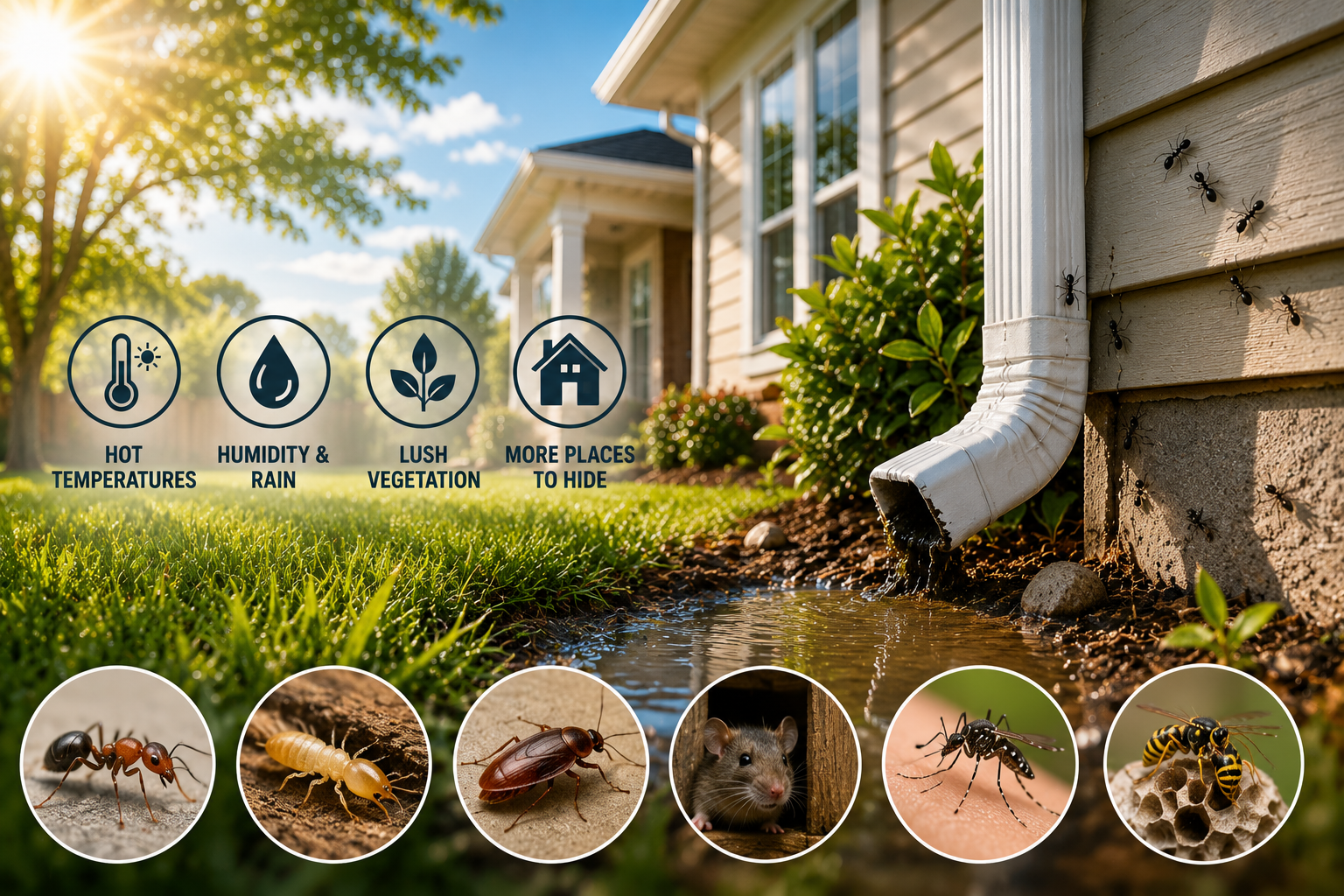
Summer weather changes the way pests move, feed, nest, and seek shelter. Higher temperatures can increase insect activity, while humidity and rainfall create moisture many pests depend on. Open doors, landscaping, and seasonal food sources can also make homes easier to approach. Around New York properties, pest activity may involve ants, bats, bed bugs, bees, cockroaches, fleas, flies, mosquitoes, rodents, termites, ticks, stink bugs, stinging insects, and spiders. Because these pests respond differently to summer conditions, professional inspection helps identify what is driving activity and where treatment should be focused. Heat Can Increase Movement And Feeding Warm temperatures often make insects more active because their development and movement are influenced by surrounding conditions. Ants may forage farther for food and moisture, flies can reproduce quickly around organic material, and mosquitoes become more noticeable when water and shade are available. Common summer changes include: A visible pest may be only one part of a larger pattern involving moisture, shelter, or repeated access to the structure. Humidity And Rain Can Support Recurring Problems Summer rain can temporarily change a property from dry to damp, creating new opportunities for pests. Water may collect in gutters, planters, low spots, basements, or around foundations. Humidity can also keep shaded areas damp longer after rainfall ends. Cockroaches are especially persistent when food, water, and hidden harborage remain available. Guidance on recurring cockroach activity shows why damp basements, plumbing areas, utility spaces, clutter, and small entry points can allow infestations to rebuild even after visible numbers decline. Professional pest control connects these conditions with the pest involved, helping technicians determine whether moisture, sanitation, entry points, or hidden nesting areas are contributing to repeat activity. Outdoor Structures Can Attract Summer Nesting Pests Decks, porches, sheds, fences, roof trim, and other exterior features can become important pest zones during warm weather. Bees and stinging insects may use sheltered areas for nesting, while spiders may settle where flying insects are abundant. Areas worth monitoring include: Carpenter bees show how seasonal activity can become more obvious around wood. Their nesting may create repeated buzzing and round openings, while galleries can extend beyond the visible entrance. Carpenter Bee Activity Often Becomes Easier To Notice Warm weather increases the feeding, flight, and nesting behavior that makes carpenter bees more visible around homes. They may return to wooden areas used in previous seasons or establish new galleries nearby. A closer look at summer bee activity explains why exposed or weathered wood can attract nesting. Repeated use of the same boards over several seasons can contribute to cosmetic damage and gradual weakening. Professional inspection helps distinguish active carpenter-bee galleries from old holes or damage caused by another pest. That distinction matters because the appropriate response depends on whether nesting is current, where galleries are located, and whether nearby areas are also active. Surface-level attention alone may miss concealed nesting, so accurate identification and follow-up are important when activity keeps returning to the same wooden features. Long-Term Summer Control Depends On Monitoring Summer pest pressure changes as temperature, rainfall, vegetation, food availability, and indoor conditions shift. A property that has little activity in early summer may develop new problems after storms, increased irrigation, or extended heat. A long-term plan may include: Rodents, bats, termites, bed bugs, ticks, fleas, stink bugs, and other handled pests may require very different inspection methods and treatment strategies. That is why one-size-fits-all pest control is rarely the most efficient approach. Professional monitoring creates continuity. Technicians can compare findings, recognize seasonal patterns, and adjust treatment as conditions change before small signs become larger infestations or property concerns. Summer weather does not create every pest problem, but it can intensify the conditions that help pests move, feed, reproduce, or seek shelter. When heat, moisture, access, nesting areas, and follow-up are considered together, homeowners are better prepared to manage seasonal pest activity before it becomes a recurring issue. Keep Summer Pest Pressure From Settling In If warmer weather is bringing more pest activity around your property, contact Termicide for professional inspection, targeted treatment, prevention, and follow-up based on the conditions around your home.

How General Pest Control Helps Prevent Repeat Problems
A pest problem may appear resolved when ants disappear from a counter, scratching stops inside a wall, or insects are no longer visible near a window. Yet activity can return when nests, breeding sites, entry points, or attractive property conditions remain unchanged. Many pests spend most of their time in concealed spaces, so surface-level improvement does not always mean the source has been eliminated. General pest control takes a broader view. Professionals identify the pest, inspect the areas connected to its behavior, apply targeted treatment, and monitor conditions that could support another infestation. This structured process is especially useful for ants, cockroaches, spiders, flies, fleas, beetles, silverfish, meal moths, stink bugs, rodents, and other pests handled through residential or commercial service. Accurate Identification Prevents Misdirected Treatment Different pests can appear in similar locations while requiring completely different responses. Carpenter ants may travel from moisture-damaged wood, cockroaches may emerge from drains or concealed harborages, and meal moths may originate inside stored pantry products. Treating the room without identifying the species can leave the actual source untouched. A professional inspection may evaluate: Identification guides product selection, placement, preparation, and follow-up. It also helps distinguish a minor intruder from evidence of a more established infestation. Seasonal Pressure Changes Where Pests Appear Warmth, humidity, rainfall, vegetation, and household routines influence pest movement throughout Rockland County. The overview of active summer pests shows how carpenter ants, mosquitoes, ticks, flies, fleas, spiders, carpenter bees, beetles, stinging insects, termites, and cockroaches can become more noticeable as outdoor conditions change. A dry period may push insects toward indoor moisture, while heavy rain can disturb soil nests or create mosquito-breeding water. Cooler weather may increase rodent and stink bug movement toward protected structures. General service allows technicians to respond to these shifts rather than relying on the same one-time application year-round. Seasonal awareness also improves timing. Treatment can be reinforced around active exterior routes, while monitoring helps identify new pressure before pests spread deeper into the building. Source Reduction Makes Treatment More Durable Products work best when the conditions supporting pests are also addressed. Food residue, damp wood, leaking pipes, standing water, clutter, damaged screens, and open utility gaps can repeatedly attract or admit pests. Correcting these conditions reduces the resources available after treatment. A property-wide plan may include: Source reduction does not replace treatment when active pests are present. Instead, it supports the professional work by making the property less favorable for nesting, feeding, and reentry. This combination produces a stronger long-term result than repeatedly responding to visible insects or rodents. Serious Infestations Often Extend Beyond Sight The difficulty with repeat problems is that pests rarely remain only where homeowners notice them. Ant colonies can occupy wall voids or damp wood. Cockroaches may reproduce behind appliances and inside cracks. Flea life stages can remain in rugs and pet-resting areas. Rodents may travel between attics, walls, storage zones, and exterior openings. The limitations of surface-level pest attempts become clear when visible activity declines but concealed populations remain. Some products may also interfere with baiting strategies, scatter pests, or treat the wrong location. Professional pest control focuses on behavior and distribution. Technicians determine where pests are nesting, feeding, breeding, or entering, then select treatment for those confirmed areas. This prevents repeated trial-and-error applications from delaying a more complete response. Monitoring Reveals Whether Conditions Have Changed Follow-up is what separates temporary suppression from an ongoing management plan. Pest pressure can return after weather changes, deliveries, repairs, travel, landscape growth, or new moisture problems. Monitoring gives technicians a way to compare current evidence with earlier findings and adjust service when necessary. Follow-up may involve: Some pests require specialized service beyond general coverage. Bed bugs, termites, mosquitoes, ticks, bats, rodents, and stinging insects may need pest-specific inspection, preparation, equipment, exclusion, or recurring treatment. Recognizing that distinction early prevents a general application from being used where a specialized plan is more appropriate. General pest control helps prevent repeat problems by connecting identification, treatment, source reduction, exclusion, and follow-up. Rather than addressing each sighting in isolation, professionals evaluate the property as a system. That wider perspective makes it easier to find concealed causes, respond to seasonal pressure, and keep small warning signs from developing into persistent infestations. Keep Recurring Pest Pressure From Rebuilding Contact Termicide for professional inspection, targeted pest control, property-wide prevention, and dependable follow-up for recurring pest concerns.

What Summer Pests Are Most Active In Rockland County?
Summer in Rockland County brings warmer temperatures, increased humidity, longer days, and more activity around yards and homes. These conditions encourage several pests to forage, reproduce, and move closer to structures for food, water, and shelter. The pests most likely to become noticeable include carpenter ants, mosquitoes, ticks, flies, fleas, spiders, carpenter bees, beetles, and stinging insects. Termites may also become more visible when winged reproductives emerge, while cockroaches can move between damp outdoor areas and buildings. Understanding when and where these pests become active helps homeowners respond before seasonal pressure becomes a larger problem. Carpenter Ants And Termites Become Easier To Notice Warm weather increases insect movement around trees, damp wood, foundations, decks, and rooflines. Carpenter ants may establish nests in moisture-damaged wood, while termites can remain concealed as they travel between soil and cellulose-based materials. Summer warning signs may include: Correct identification matters because carpenter ants excavate wood for nesting, while termites consume cellulose. A professional inspection can distinguish the insects, locate conducive moisture, and determine whether activity is limited or connected to a concealed colony. Mosquitoes And Ticks Increase Around Yards Rockland County’s wooded areas, brushy property edges, lawns, and landscaped spaces can support ticks throughout the warm season. Mosquitoes become more active when rainfall, irrigation, containers, and clogged drainage create water where immature stages can develop. Both pests may remain concentrated in areas that people use less often, including dense vegetation, fence lines, shaded ground cover, and the borders between lawns and woods. Inspection helps identify where activity is greatest. Professional mosquito and tick service is more effective when it is based on the property’s vegetation, moisture, wildlife movement, and outdoor-use patterns. One-time attention may miss shaded resting sites or high-risk edges that remain active throughout summer. Stinging Insects Build Nests Near Daily Activity Carpenter bees and other stinging insects become highly visible as they forage around flowers and establish nests near structures. Carpenter bees often tunnel into weathered wood, while social stinging insects may use eaves, wall openings, shrubs, ground cavities, or sheltered building features. Signs of active nesting include: Wasp control and other stinging-insect services should begin with identification and nest assessment. Nest location, species, access, and nearby foot traffic all affect the safest and most efficient response. Disturbing a concealed colony without understanding its position can increase defensive activity. Flies, Fleas, And Spiders Follow Summer Conditions Flies become more common where outdoor waste, decaying material, pet areas, food residue, or open doors provide access and feeding opportunities. Fleas may develop around pets, wildlife resting areas, fabrics, carpeting, or shaded outdoor locations. Spiders often gather where these and other insects provide a reliable food source. These pests may require different responses even when they appear during the same season. Flies are often tied to sanitation and exclusion concerns, fleas involve animal hosts and immature stages, and spiders may indicate that insect prey is abundant nearby. A professional evaluation considers the full pattern rather than treating each visible pest as an isolated event. Finding the source may involve checking screens, waste areas, pet spaces, stored materials, basements, garages, exterior lighting, and low-disturbance corners around the property. Seasonal Prevention Requires Property-Wide Attention Summer pest activity changes as weather, vegetation, moisture, and household routines shift. A dry period may drive insects toward water, while heavy rain can increase mosquito breeding and move ants or cockroaches toward sheltered areas. Outdoor meals, travel, pets, and open doors can create additional pressure. A property-wide plan may include: Professional pest control brings accurate identification and technical knowledge to these overlapping concerns. Carpenter ants, termites, mosquitoes, ticks, flies, fleas, spiders, carpenter bees, beetles, cockroaches, rodents, silverfish, meal moths, and bed bugs do not share the same habits or treatment needs. The most efficient approach focuses on current evidence, likely sources, and the property conditions sustaining activity. Early inspection can prevent a few seasonal signs from becoming a long-term issue hidden inside walls, attics, storage areas, or surrounding landscape. Stay Ahead Of Rockland County’s Summer Activity Summer pests can spread quickly when heat, moisture, and shelter overlap. Contact Termicide for professional pest control based on careful identification, targeted service, and more than 40 years of local experience.

Can DIY Pest Control Solve A Serious Pest Infestation?
Seeing a few ants near the kitchen sink or a spider in the basement may seem like a simple problem. Serious infestations, however, are rarely limited to the pests that are immediately visible. Activity may extend behind walls, beneath floors, inside furniture, around plumbing, in attics, or through hidden entry points. DIY pest control products are widely available, and they may appear to offer a convenient answer. The difficulty is that reducing visible activity is not always the same as solving the underlying infestation. When pests have established nests, breeding sites, shelter, or repeated access to a property, effective control requires understanding where the problem started and what continues to support it. Why DIY Pest Control Often Addresses Only What You Can See Many household pest products are designed to kill or repel pests that come into contact with them. This may produce a quick reduction in activity, but serious infestations usually involve more than the insects or rodents appearing in open areas. Several hidden factors can keep a problem going: DIY pest control may reduce the number of pests seen temporarily without reaching the source. Once the immediate effect of the product fades, activity can return because the conditions supporting the infestation never changed. Serious Infestations Require Correct Pest Identification Different pests require different treatment strategies. Even pests that appear similar may have very different nesting habits, food preferences, breeding cycles, and hiding places. Treating the wrong pest or misunderstanding its behavior can waste time while the infestation becomes more established. For example, carpenter ants may be linked to damp or damaged wood, while termites require an entirely different inspection and treatment approach. Flying insects near an exterior wall could involve bees or another stinging insect, and the nest location may determine how the situation should be handled. Rodent noises in a wall also require investigation to identify entry routes, rather than focusing only on the area where scratching happens to be heard. A thorough inspection helps determine the pest involved, the extent of activity, and the conditions making the property attractive. Without that information, treatments can become little more than guesswork. This is particularly important with bed bugs, termites, cockroaches, rodents, and other persistent pests. The visible signs may represent only a small part of a larger problem that extends into nearby rooms or structural areas. Common Reasons Pest Problems Keep Coming Back Recurring infestations are often a sign that something important has been overlooked. Applying another spray or replacing another trap may not provide lasting improvement when the property still offers food, water, shelter, or easy access. Common contributing conditions include: A serious infestation may involve several of these conditions at once. For that reason, lasting control usually depends on understanding the entire property rather than repeatedly treating the same visible area. Misusing Pest Products Can Make Control More Difficult Using more product does not automatically create better results. Pesticides, baits, traps, and repellents need to be selected and placed according to the pest, location, infestation level, and label directions. In some cases, an unsuitable treatment can scatter pests into new hiding places or reduce visible activity without affecting the larger population. Improperly placed products may also fail to reach areas where pests actually travel, breed, or rest. Other challenges include: This is why serious pest activity should be approached carefully. The objective is not simply to kill individual pests. It is to interrupt the conditions and behaviors allowing the infestation to continue. When Professional Pest Control Becomes the More Reliable Approach A minor, isolated pest sighting is different from repeated activity, structural damage, unexplained bites, droppings, scratching noises, recurring nests, or pests appearing in several parts of a property. Those signs can indicate that the problem has moved beyond what surface-level DIY pest control can realistically address. Professional pest control begins with identifying what is happening before selecting a treatment. A trained technician can inspect food sources, moisture, wood, clutter, openings, hiding places, nesting areas, and likely travel routes. The pest species, property layout, safety needs, and severity of activity can then guide the next step. This targeted approach is particularly valuable when dealing with termites, bed bugs, cockroaches, rodents, carpenter ants, fleas, ticks, or other pests that can remain hidden or reproduce quickly. Instead of relying on repeated trial and error, professional help can focus on the source of the infestation and the conditions that make recurrence more likely. The earlier a serious problem is properly assessed, the easier it may be to prevent pests from spreading into additional rooms, damaging materials, or becoming firmly established. Stop Guessing and Get to the Source When pests continue returning despite repeated attempts to control them, a closer inspection may be necessary. Contact Termicide for professional help identifying the source of the infestation and determining the right treatment for your property.