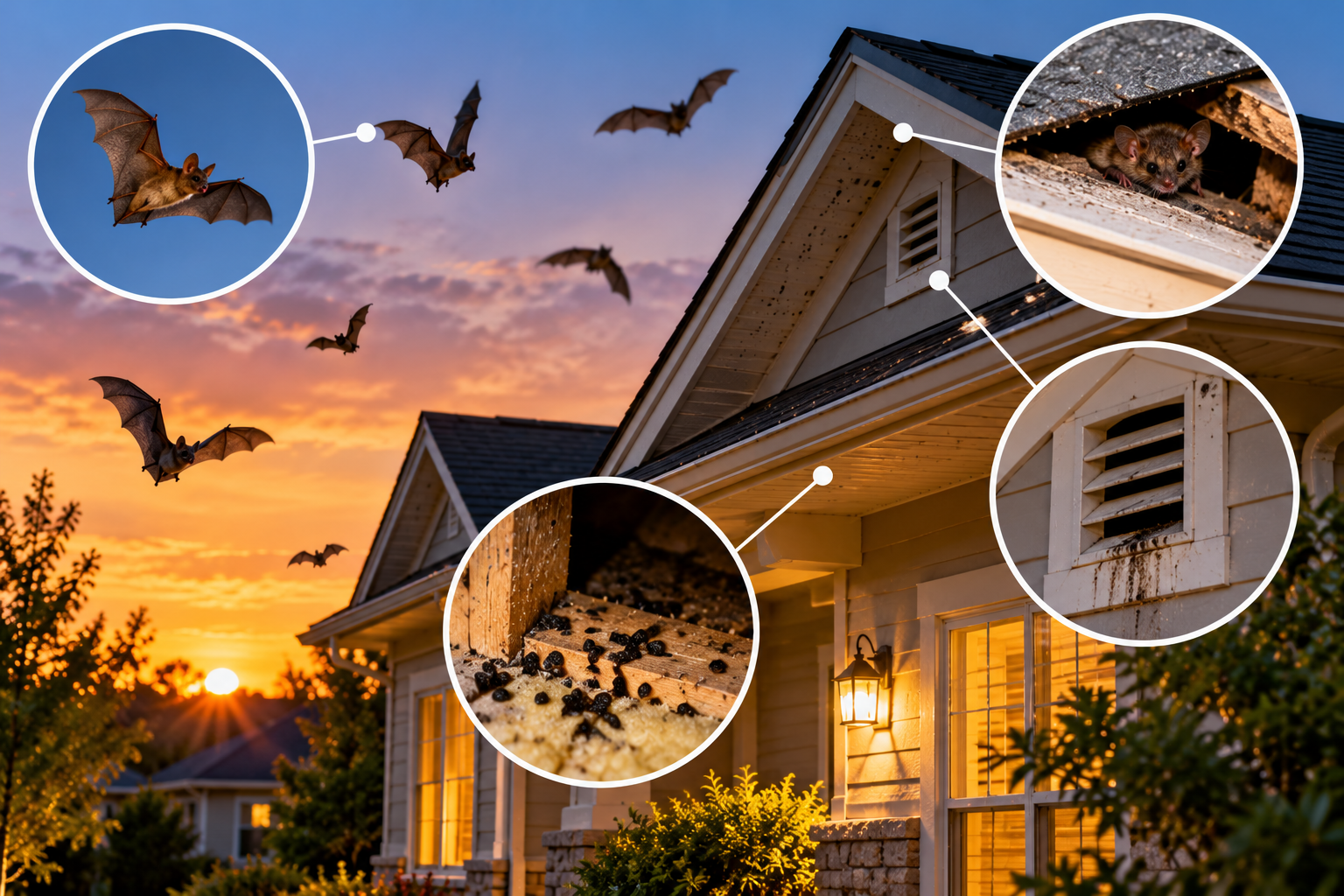
Bat activity near a roofline can be more than an occasional outdoor sighting. When bats repeatedly circle the same eave, disappear near a vent, or emerge from one section of the roof at dusk, the pattern can indicate that a small opening is being used as an entry point. Attics, soffits, chimneys, fascia gaps, vents, and loose trim can all provide access to protected roosting areas. Our team approaches bat concerns by looking at the whole upper structure rather than focusing only on the last place a bat was seen. Professional inspection helps us trace how bats are entering, where they may be roosting, and whether droppings, staining, odors, or attic evidence support the same route. The visible flight path outside may represent only one part of the problem. Repeated Roofline Movement Can Point To A Hidden Opening Bats often use small upper-level gaps that are difficult to see from the ground. A vent edge, loose soffit, worn fascia, chimney gap, or separated trim can provide enough access to an attic or other protected space. When the same area shows activity on multiple evenings, that consistency deserves a closer look. Our article on repeat pest problems explains why recurring activity often continues when entry points, shelter, or other supporting conditions remain unchanged. Warning signs around the roofline can include: These clues help our technicians narrow the inspection instead of assuming every roof gap is active. Attic Evidence Helps Confirm Whether The Roofline Is Being Used Roofline activity becomes more meaningful when it matches evidence inside the attic. Bats may roost in quiet upper areas where they are protected from weather and disturbance. Droppings, stains, odor, or repeated movement sounds can help confirm whether the exterior activity is connected to an indoor roosting space. Our technicians inspect attic corners, vents, soffits, chimneys, trim gaps, and other likely access areas before any exclusion or sealing work begins. A professional inspection may include: Sealing the wrong opening too early can complicate the situation, so the active route should be confirmed first. Safe Exclusion Depends On Timing And Correct Entry-Point Identification Bat control is different from ordinary surface-level pest treatment. Once an entry route is confirmed, exclusion needs to be planned so bats can leave through the appropriate exit without being trapped inside or redirected into living areas. That process also needs to account for the condition of the roofline and whether additional openings could allow re-entry. Our discussion of serious pest infestations explains why hidden access points and concealed activity can make surface-level responses incomplete. Bat problems are a clear example because the visible animal may not reveal the full roosting pattern. Professional bat exclusion may involve: Follow-up is important because one corrected gap does not automatically mean every access point has been resolved. Rockland County homes with older trim, mature trees, wooded surroundings, or nearby water can have roofline conditions that deserve extra attention. Those features do not guarantee a bat problem, but they can make upper-level shelter more accessible. Our team uses property-specific evidence to determine whether the activity is temporary or connected to a repeat entry route. Homeowners may also notice that bat activity appears concentrated around dusk. That timing can make the route easier to observe because bats may leave roosting areas to feed and later return. Repeated emergence from the same vent, soffit edge, or roof gap is more useful than a single bat flying across the yard. The strongest long-term response combines inspection, exclusion, sealing, cleanup recommendations, and follow-up. Professional service helps ensure the correct opening is addressed in the right order, reducing the chance of trapping bats or leaving another route available. Bat concerns should be handled carefully because roofline access, attic spaces, and hidden roosts can be difficult to evaluate from the ground. When exterior movement matches interior evidence, professional inspection provides the clearest way to determine whether the structure is being used and what the next step should be. Turn Roofline Clues Into A Clear Bat-Control Plan If bat activity keeps appearing near vents, soffits, fascia, chimneys, or attic openings, contact Termicide for professional inspection, exclusion planning, entry-point correction, and long-term follow-up.