
Fly activity often peaks during warm weather, but cooler temperatures do not make the problem disappear immediately. Homes and businesses can continue attracting flies after summer when food residue, garbage, drains, moisture, and protected indoor spaces remain available. Some flies may also move toward buildings as outdoor conditions become less favorable.
Effective fly control begins with identifying what is supporting the activity. Flies are highly mobile, and the place where they are seen may not be the place where they are breeding or feeding. Professional inspection helps connect visible fly activity with sanitation conditions, moisture, access points, and hidden sources that can keep the problem going into fall.
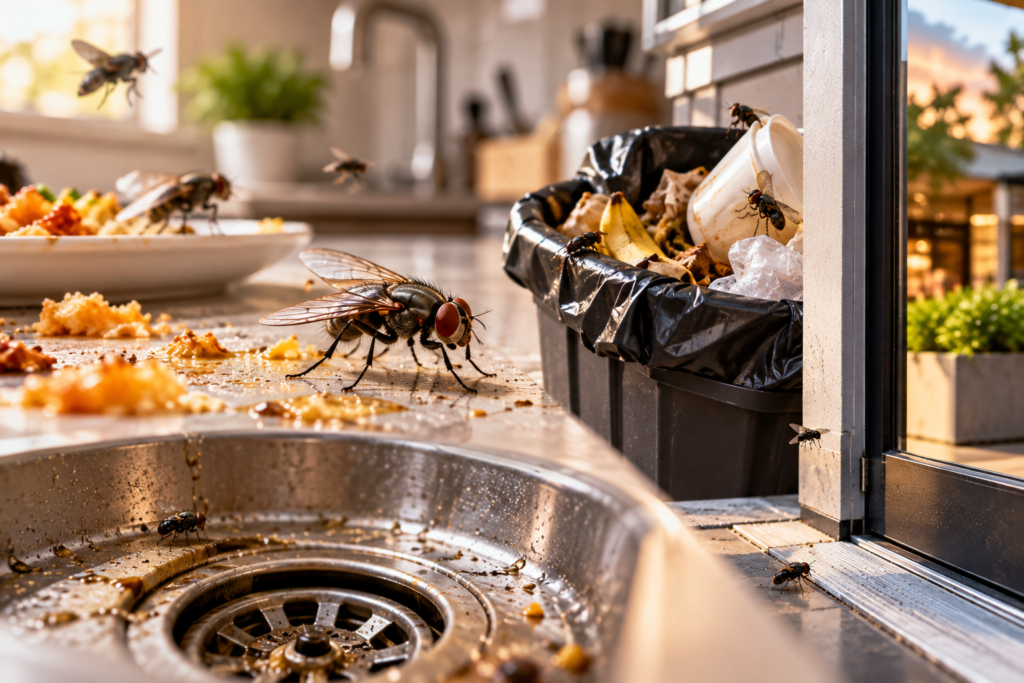
Food, Waste, And Organic Material Keep Flies Active
Flies are drawn to organic material because it can provide both food and breeding opportunities. Kitchens, trash areas, food-storage spaces, drains, and outdoor waste zones can remain attractive long after summer if residue continues to accumulate.
Common attractants include:
- Food scraps or spills beneath appliances and counters
- Trash and recycling containers with organic residue
- Drain buildup that remains damp and difficult to reach
- Pet food, animal waste, or other organic material
- Overripe produce or damaged stored food
- Outdoor dining and garbage areas near doors
The connection between warmer conditions and summer fly activity helps explain why populations can remain noticeable into early fall. Heat can accelerate feeding and reproduction, while lingering warmth, humidity, and food sources continue supporting activity after the calendar season changes.
Cleaning visible surfaces is important, but fly control also depends on locating the material that flies are actually using. A hidden drain buildup or overlooked waste source can keep producing adults even when the surrounding area looks clean.
Moisture And Entry Points Can Extend The Problem Indoors
Flies need more than food. Moisture, shelter, and easy access can make homes and businesses more appealing as outdoor temperatures begin to shift. Open doors, damaged screens, plumbing areas, and damp utility spaces can all contribute to recurring activity.
Professionals may inspect:
- Doors that stay open during deliveries or customer traffic
- Torn screens or gaps around windows and vents
- Floor drains, sink drains, and plumbing areas with moisture
- Utility rooms, basements, and low-traffic spaces
- Exterior cracks or openings near lights and entry doors
- Damp organic debris close to the structure
Businesses can face added pressure because deliveries, waste handling, food service, and frequent door movement create repeated opportunities for flies to enter. Homes can experience similar issues around kitchens, garages, patios, and trash-storage areas.
As nights become cooler, protected indoor spaces may become more attractive even if daytime temperatures remain mild. That seasonal shift can make an existing fly source feel more noticeable because adults spend more time around interior warmth, light, and food.
Long-Term Fly Control Depends On Source Reduction
Recurring fly problems usually continue when the underlying source remains active. Treating visible adults can reduce immediate activity, but a lasting plan also needs to address breeding material, moisture, sanitation, and structural access.
A professional fly-control program may include:
- Identifying the fly species and likely breeding source
- Inspecting drains, waste areas, food-storage zones, and utility spaces
- Correcting moisture or sanitation conditions that support activity
- Treating confirmed hot spots with targeted methods
- Reviewing screens, doors, vents, and other access points
- Monitoring after service to confirm that activity is declining
The broader strategy behind repeat pest prevention applies especially well to flies. Identification, targeted treatment, source reduction, exclusion, and follow-up work together more effectively than repeatedly reacting to visible insects.
Different fly problems may also require different responses. Activity linked to trash or decaying organic material is not managed the same way as activity centered around drains or stored food. Accurate identification helps determine where technicians should focus inspection and what conditions need correction.
Follow-up is important because breeding material may be hidden or difficult to remove completely on the first visit. Monitoring can reveal whether adult numbers are falling, whether new flies are still emerging, or whether another source has been overlooked.
For businesses, documentation and routine inspection can be especially valuable. Managers can track recurring trouble spots, coordinate sanitation schedules, and address structural issues before fly activity affects employees, customers, or food-handling areas.
Homeowners benefit from the same structured approach. A recurring cluster of flies near one window may point to an entry route, while activity around a kitchen or basement may indicate a nearby moisture or organic source.
Seasonal changes do not automatically eliminate fly pressure. Lingering warmth, indoor heating, food availability, and protected breeding sites can allow activity to continue well after summer. The most effective response is to understand why flies are staying rather than assuming cooler weather will solve the problem.
Professional fly control brings together inspection, sanitation guidance, targeted treatment, exclusion, and monitoring. That combination helps reduce current activity while making the property less supportive of another cycle.
Keep Flies From Following You Into Fall
If flies continue appearing around your home or business after summer, contact Termicide for professional inspection, targeted fly control, source reduction, and long-term prevention.