
A pet scratching more than usual may be the first sign of fleas, but the problem does not necessarily stay on the animal. Fleas can quickly spread into carpets, pet bedding, upholstered furniture, cracks near flooring, and other protected areas throughout a home.
This is what makes an indoor flea infestation so frustrating. The adult fleas seen on a dog or cat may represent only one part of a much larger population developing nearby. Eggs can fall from a pet as it walks, sleeps, jumps onto furniture, or rests on a rug. From there, immature fleas continue developing in the environment, sometimes remaining unnoticed until new adults emerge.
Effective flea control requires understanding this cycle and identifying all the places where fleas may be developing, not simply responding to the ones currently seen on a pet.
Fleas Can Enter A Home On Pets And Other Animals
Dogs and cats are common hosts for fleas because their warm bodies, movement, and access to outdoor spaces can expose them to infested areas. A pet may encounter fleas while walking through grass, resting in a yard, visiting another property, or coming near wildlife activity.
Once a flea reaches an animal, it can begin feeding and eventually contribute to a much broader indoor problem. Several factors allow this process to happen:
- Pets move between different areas. A dog may spend time outdoors before coming inside and resting on carpets, beds, sofas, or pet bedding.
- Flea eggs do not remain firmly attached to fur. They can fall into the surrounding environment as an animal walks or lies down.
- Wildlife can contribute to outdoor flea pressure. Animals moving near yards, decks, sheds, and other sheltered spaces may leave fleas behind.
Even pets that spend most of their time indoors may be exposed under certain circumstances. Once fleas enter the home, the infestation can continue in carpets and furniture even when fewer adult fleas are immediately visible on the animal.
Flea Eggs Easily Fall Into Carpets And Upholstery
Adult female fleas can lay eggs while living on a host, but those eggs often fall off the animal and land wherever the pet spends time. This is how a flea problem that begins on one pet can gradually spread throughout several rooms.
Common locations where flea eggs and developing stages may accumulate include:
- Carpets and area rugs: Fibers provide protected spaces where eggs and larvae can become difficult to notice.
- Pet bedding: Areas where animals sleep for long periods may receive a continuous supply of flea eggs.
- Sofas and upholstered chairs: Pets that climb onto furniture can introduce fleas and eggs into cushions, seams, and fabric.
- Floor cracks and edges: Protected spaces near baseboards and between flooring materials may provide suitable hiding areas.
The trouble is that homeowners usually notice adult fleas first. Eggs and larvae are much easier to miss. As a result, treating only the pet may reduce some immediate activity while leaving a developing flea population throughout the home.
The Flea Life Cycle Makes Infestations Hard To Eliminate
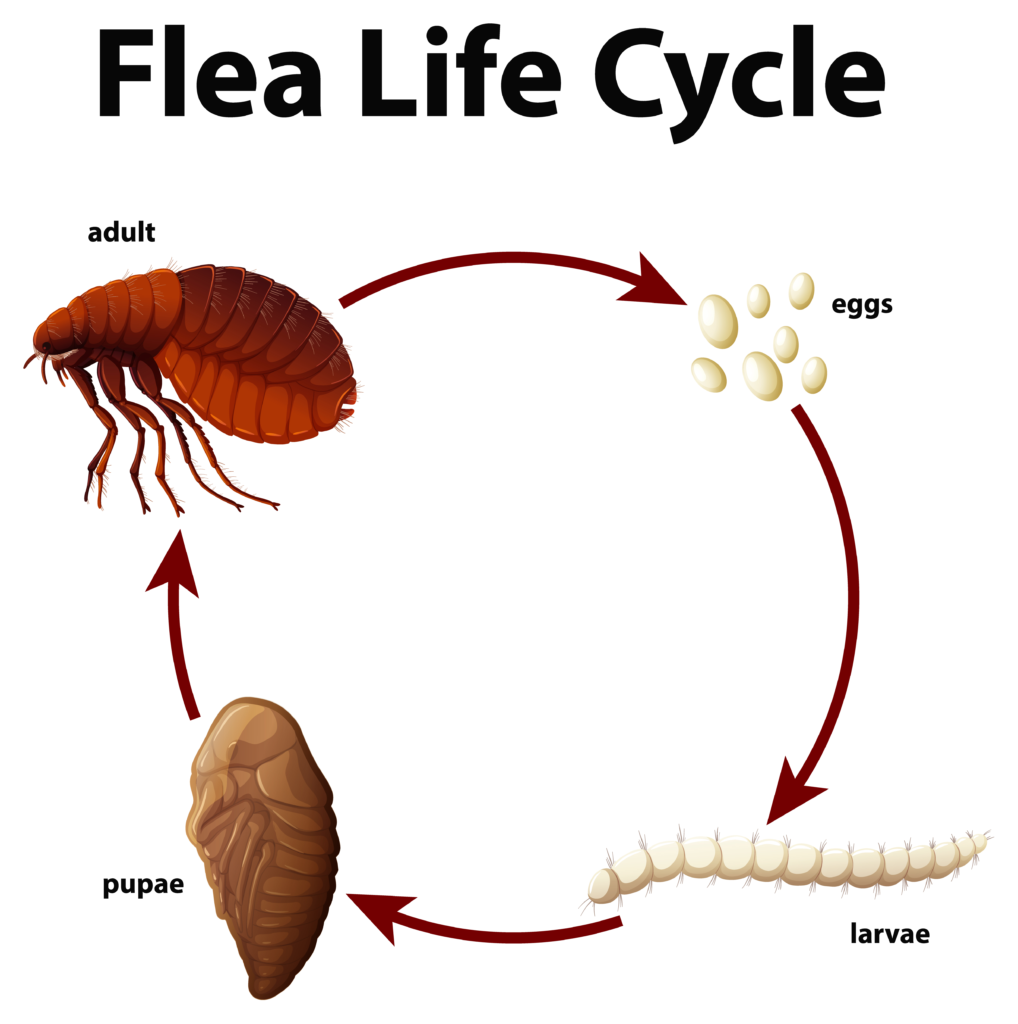
Fleas pass through four life stages: egg, larva, pupa, and adult. Each stage behaves differently, which is one reason an infestation may persist even after the number of visible fleas appears to decline.
After eggs fall from a host, larvae can develop in protected indoor environments. They tend to avoid bright, exposed areas and may remain deep within carpet fibers, underneath furniture, or around other sheltered spaces.
The pupal stage creates an additional challenge. A developing flea can remain protected inside a cocoon until environmental signals suggest that a host is nearby. Movement, warmth, and carbon dioxide can contribute to adult emergence.
This helps explain why people sometimes experience a sudden burst of flea activity after entering a room that has been quiet for some time. Newly emerged adults begin searching for a suitable host, creating the impression that an infestation appeared overnight.
Professional flea control accounts for this life cycle. A single treatment directed only at visible adults may not affect every developmental stage at the same time, making proper inspection, treatment placement, and follow-up considerations especially important.
Why Fleas Often Gather Around Pet Resting Areas
Flea activity is rarely distributed evenly throughout a home. Areas where pets spend the most time frequently experience greater pressure because eggs repeatedly fall into the surroundings.
Several locations deserve particular attention:
- Sleeping areas: Pet beds, blankets, bedroom carpets, and favorite resting corners can become concentrated flea zones.
- Furniture: Cushions, upholstery seams, and spaces underneath sofas may provide protected environments.
- Rugs and carpeting: Flea eggs and larvae can settle deep within fibers, especially in quieter areas with less foot traffic.
- Outdoor resting spots: Shaded portions of yards, spaces beneath decks, and areas where animals gather may contribute to continued exposure.
Understanding these patterns is important because treating random areas may miss the places supporting the greatest amount of flea development. An effective approach considers where pets spend time, how they move through the property, and whether outdoor conditions may be contributing to repeated infestations.
Lasting Flea Control Must Address More Than The Pet
Treating a pet is an important part of responding to fleas, but it may not resolve an infestation that has already spread into the surrounding environment. By the time adult fleas are regularly noticed, eggs, larvae, or pupae may already be present in carpets, bedding, furniture, and protected flooring areas.
A thorough flea control strategy looks at the entire property. This includes pet resting locations, rugs, upholstered furniture, cracks, bedding, outdoor activity, and the severity of the infestation. Treatment should be concentrated where flea activity and development are actually occurring rather than applied without considering the pet’s habits and the home’s layout.
Persistent infestations can be especially difficult because different life stages may emerge at different times. This can make the problem seem to disappear briefly before bites and visible fleas return.
When flea activity continues despite addressing the pet, it may indicate that the indoor environment is still supporting the infestation. A detailed professional inspection can help identify overlooked areas and guide treatment toward the locations most likely to be contributing to the cycle.
Break The Flea Cycle Before It Spreads Further
When fleas move beyond a pet and into carpets, furniture, or bedding, getting to the source becomes essential. Contact Termicide for professional flea control focused on the areas where infestations develop and persist.